31.8mm vs. 22.2mm BMX Handlebars: What’s the Difference?
Over the last several years, 31.8mm oversized handlebars and stem combinations have become increasingly common in BMX racing. While the traditional 22.2mm setup still remains extremely popular, many riders are left wondering what actually separates the two systems — and whether upgrading is worth it.
The truth is, both options can perform at a very high level. Choosing between them ultimately comes down to rider preference, riding style, and the type of feel you want from your bike.
Understanding the Numbers
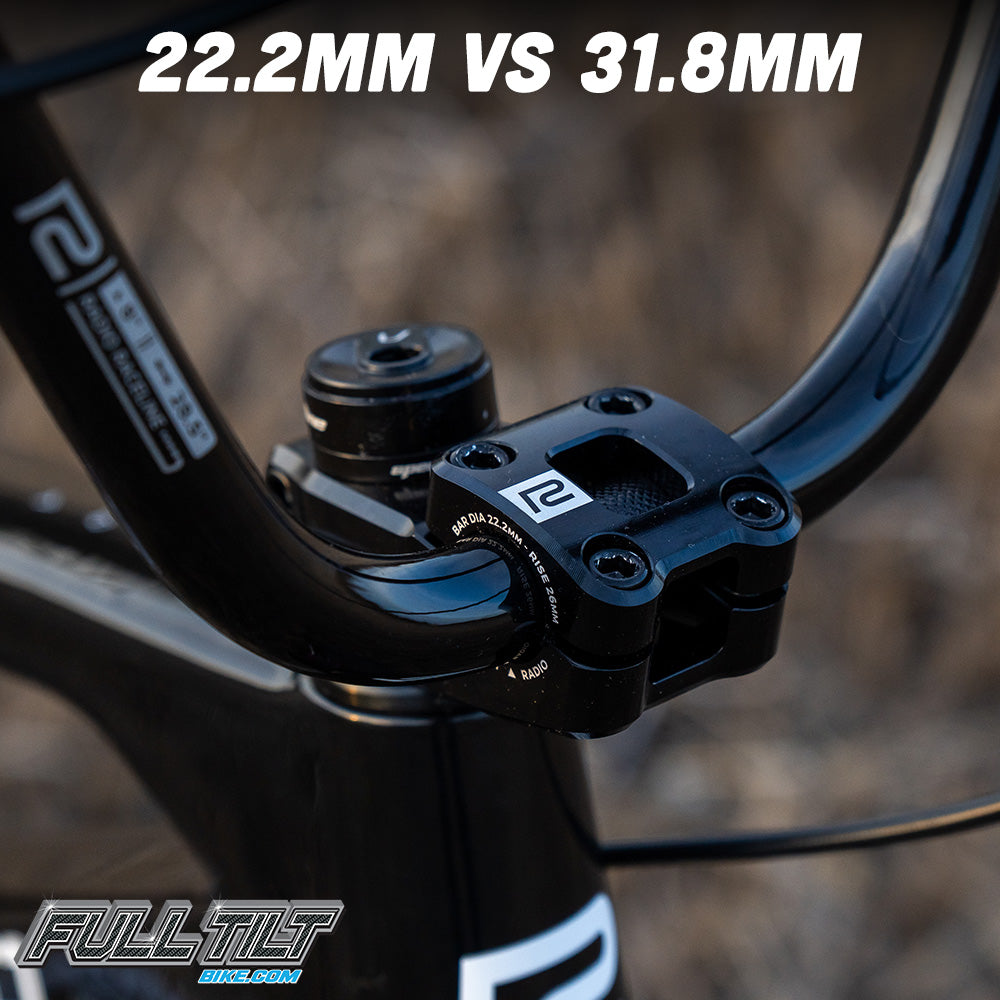
The “22.2mm” and “31.8mm” measurements refer to the diameter of the handlebar clamping area where the stem secures the bars.
- 22.2mm is the long-standing BMX standard.
- 31.8mm is an oversized standard originally popularized in mountain biking before making its way into BMX racing.

Because the clamp diameters are different, the handlebars and stem must match. A 31.8mm stem only works with 31.8mm bars, while a 22.2mm stem requires 22.2mm bars.
Advantages of 31.8mm Oversized Bars
The biggest advantage of a 31.8mm cockpit is increased stiffness.
With a larger clamping area, the bars and stem flex less under heavy load. This can provide:
- More direct steering feel
- Improved front-end responsiveness
- Better stability during sprints and hard pulls
- Increased rigidity on larger jump sections
For bigger, stronger, or more aggressive riders, the oversized setup can create a more solid and connected feeling on the bike.
Many riders also prefer the modern appearance of oversized bars, as they typically feature larger tubing and a more aggressive look overall.
Advantages of 22.2mm Standard Bars
While 31.8mm systems have gained popularity, the traditional 22.2mm setup still offers several advantages.
The smaller clamp diameter allows for slightly more flex in the cockpit. That added compliance can help absorb vibration and create a smoother overall ride feel — something many riders appreciate on rougher tracks.
Other benefits include:
- Lighter overall weight in many cases
- More bar and stem options available
- Lower replacement cost
- A familiar feel many racers grew up riding
Some riders simply prefer the slightly more forgiving feel of a standard 22.2mm setup, especially on technical or chattery tracks.
Which One Is Faster?
Realistically, neither system is automatically “faster.”
A properly designed 22.2mm cockpit is still fully capable of winning at the highest levels of BMX racing. At the same time, many elite riders have transitioned to 31.8mm setups because they prefer the added stiffness and steering precision.
The better option is the one that complements your riding style and gives you the most confidence on the track.
- Riders looking for maximum rigidity and responsiveness may prefer 31.8mm.
- Riders wanting a smoother, more compliant feel may lean toward 22.2mm.
Final Thoughts
Both 22.2mm and 31.8mm handlebar systems have proven themselves at every level of BMX racing. Neither choice is wrong, and both can deliver elite-level performance when paired with the right setup.
As with most things in BMX, rider preference plays a massive role. The best approach is to understand the characteristics of each system and choose the one that best matches your goals, riding style, and feel preferences on the track.
For more tips on setting up your front end, check out our deep dive on stems. We cover everything from length, rise, stack height, and more. Should you ever need help dailing in your ride be sure to give us a call or reach out via our contact page.